Saniya Gazala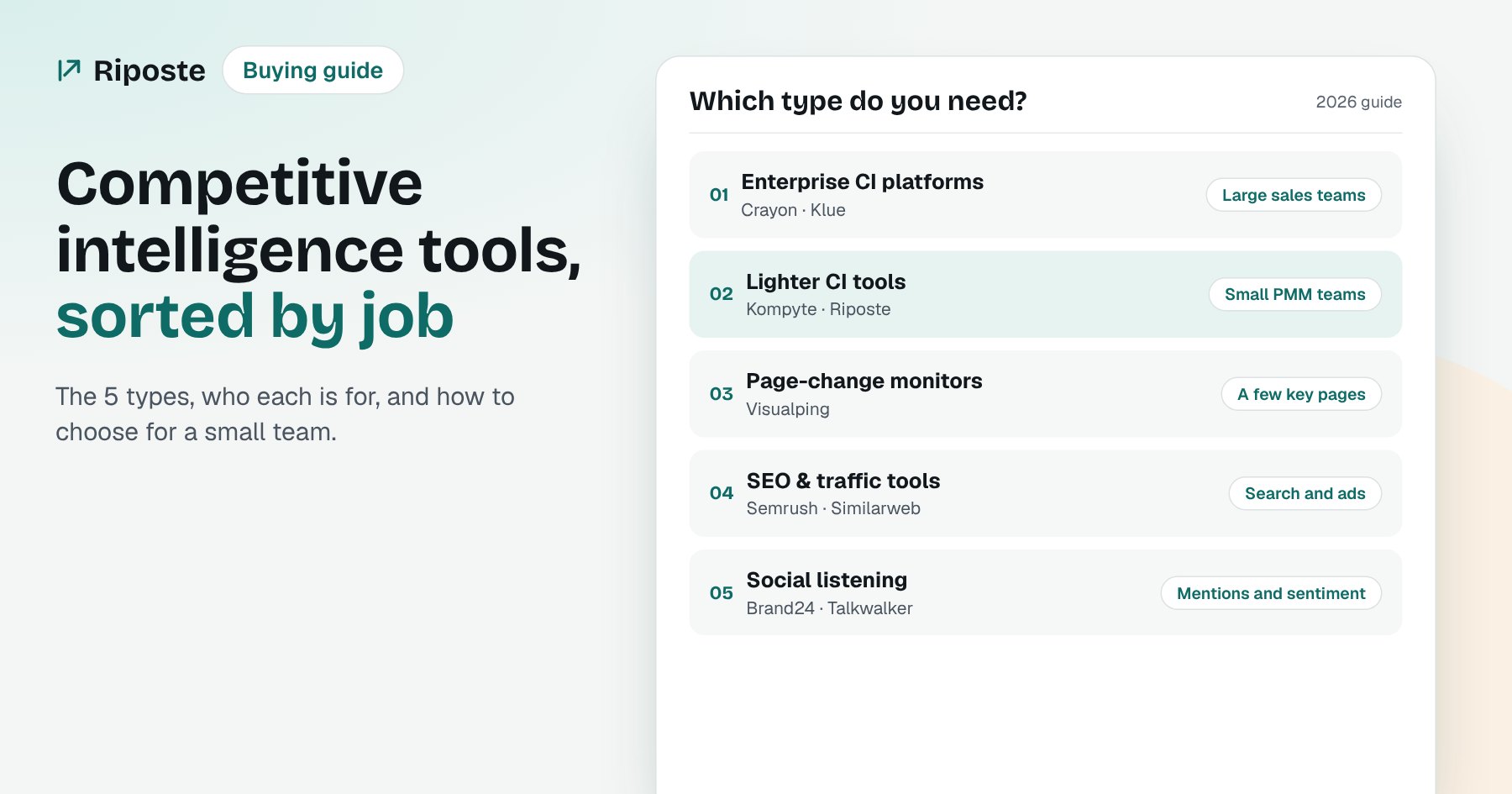
In short
Competitive intelligence tools fall into five types: enterprise CI platforms (like Crayon and Klue), lighter CI tools (like Kompyte and Riposte), page-change monitors (like Visualping), SEO and traffic tools (like Semrush and Similarweb), and social listening tools (like Brand24). Large sales teams usually need an enterprise platform. Small teams do better with a lighter tool that checks competitors daily, explains what changed and helps them respond, without an annual contract.
If you search "competitive intelligence tools", you'll find lists of 15 or 20 products ranked as if they all do the same job. They don't. Some are built for 200-person sales teams. Some only tell you that a web page changed. Some are really SEO tools.
So instead of another ranked list, this guide sorts the tools by type, says who each type is for, and gives you questions to ask before you buy. I'll name real tools, including the one I built, Riposte, and I'll be clear about where it fits and where it doesn't.
What is a competitive intelligence tool?
A competitive intelligence (CI) tool collects what your competitors change and publish, then helps your team understand it and act on it. That usually means:
- Watching pricing pages, product updates, blogs, news and sometimes social media
- Filtering the noise, like a changed date or a new cookie banner
- Explaining why a change matters for your product
- Sharing it with the people who need it, usually through battlecards, alerts or a digest
Every tool does some of these. Very few do all four well. The right tool depends on which of the four you need most.
Start with the job, not the tool
Write down the one question you want answered every week, like "Did any competitor change pricing?" or "What should sales say about their new feature?". Then pick the type of tool that answers it.
The 5 types of competitive intelligence tools
| Type | Examples | Best for | How it's usually priced |
|---|---|---|---|
| Enterprise CI platforms | Crayon, Klue | Large sales teams that live in battlecards and the CRM | Custom annual contract, ask for a quote |
| Lighter CI tools | Kompyte (by Semrush), Riposte | Small marketing or PMM teams tracking a handful of competitors | Lower-cost plans, some with a free tier or beta |
| Page-change monitors | Visualping | Watching a few specific pages for any change | Free plan plus monthly plans |
| SEO and traffic tools | Semrush, Similarweb | Competitors' keywords, ads and website traffic | Published monthly plans, free trials |
| Social listening tools | Brand24, Talkwalker | Mentions and sentiment across social, forums and news | Monthly plans or custom |
Pricing models as of October 2026. Check each vendor's site for current plans.
1. Enterprise CI platforms
Crayon and Klue are the best known. They track a wide range of competitor sources, score what's important, and push it to sales through battlecards, CRM integrations and alerts. Klue is especially strong on battlecards and win/loss analysis.
Good fit if: you have a big sales team, a dedicated CI or PMM person to run the tool, and the budget for an annual contract.
Not a fit if: you're one PMM with five competitors and no time for a multi-week setup.
2. Lighter CI tools
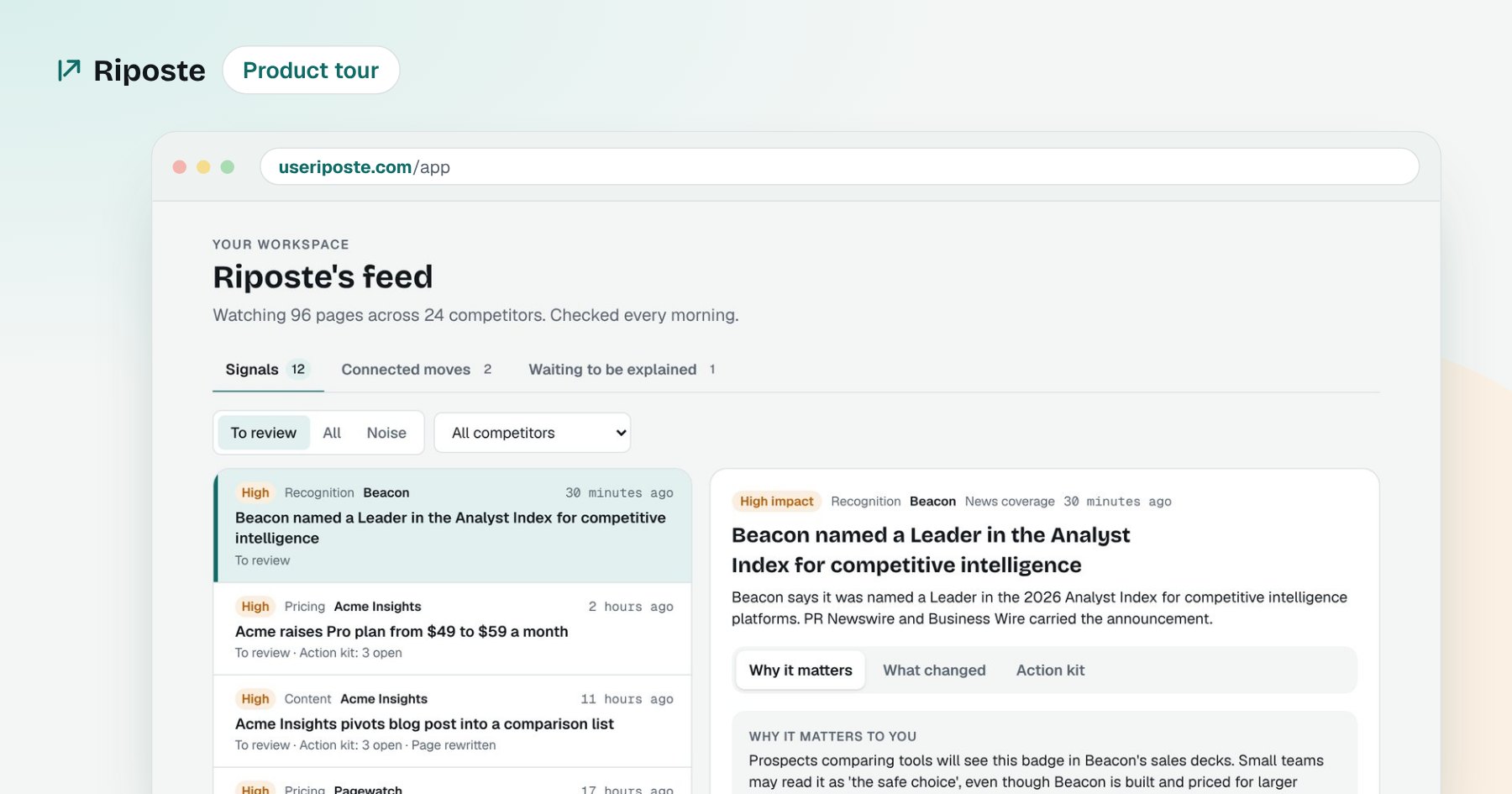
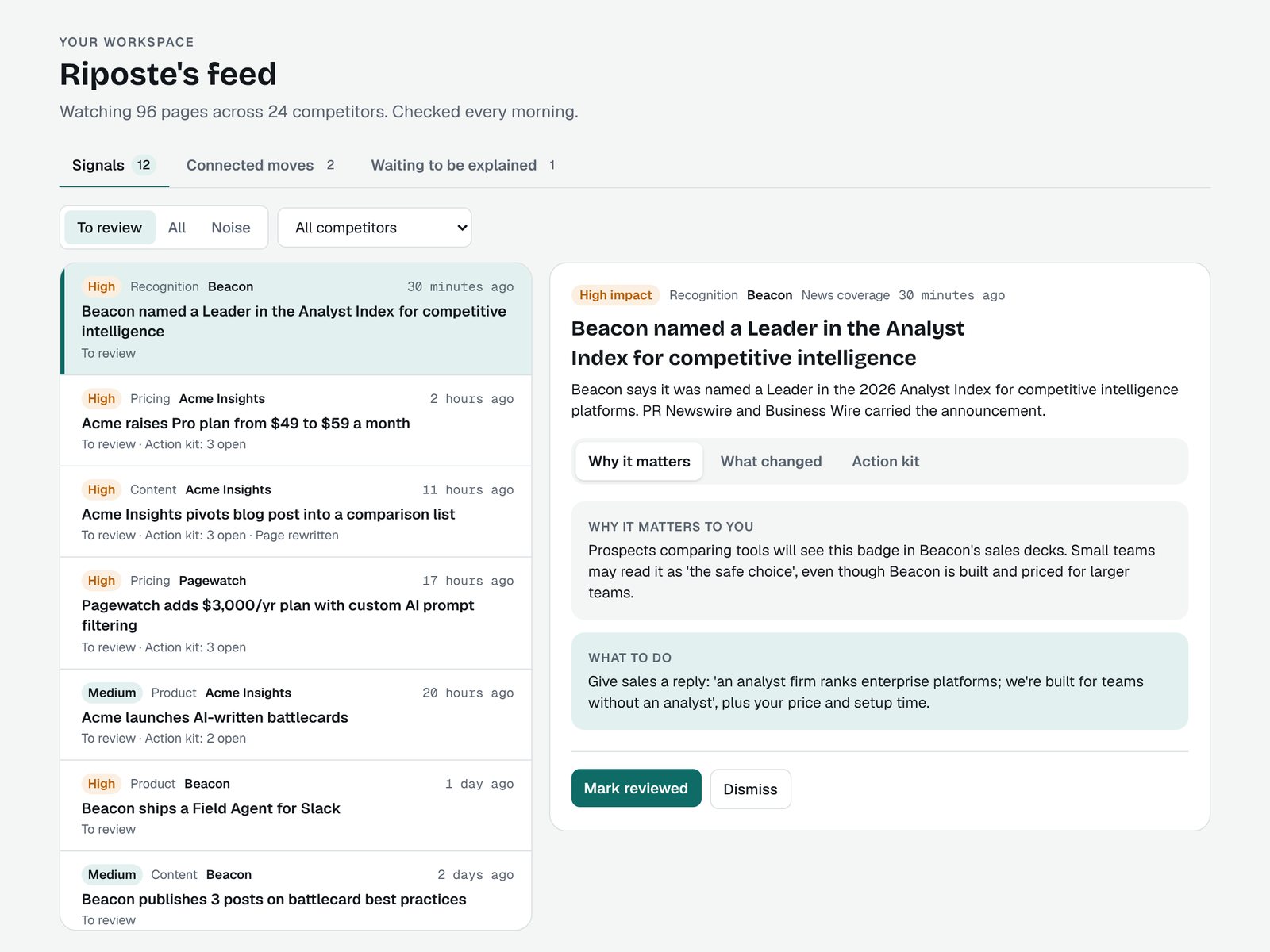
This is the group most small teams actually need. Kompyte, owned by Semrush, checks competitor sites, sorts changes and helps build battlecards. Riposte checks competitors every morning, explains each change for your product, and turns it into an action kit with owners and first drafts.
Good fit if: you need daily coverage of a few competitors and want help responding, not just alerts.
3. Page-change monitors
Visualping and similar tools watch any page you give them and alert you when it changes. They're simple and cheap, and great for one or two pages. The catch: they tell you that something changed, not what it means, so you still do the thinking, for every alert.
4. SEO and traffic tools
Semrush and Similarweb show what competitors rank for, what ads they run, and roughly how much traffic they get. They're essential for SEO and content teams. They won't tell you a competitor changed its pricing or launched a feature.
5. Social listening tools
Brand24 and Talkwalker track mentions of brands across social media, forums, reviews and news. They're best for PR and brand teams who care about what people say about competitors, rather than what competitors do.
How to choose: 6 questions to ask in a demo
- What exactly do you check, and how often? Pricing, changelog, blog, sitemap, news, social? Daily or weekly?
- How do you handle noise? Ask to see a week of real alerts. If half of them are date changes, your team will stop reading.
- Do you explain why a change matters to us? A good tool judges each change against your product, not in general.
- What happens after the alert? Can it update a battlecard, brief sales or draft a reply, or does that stay manual?
- How long is setup, and who runs it? Minutes or weeks? Does it need a full-time owner?
- How is it priced? Monthly or annual? Per seat, per competitor or flat? What does onboarding cost?
Ask for a trial on your real competitors
A demo with the vendor's sample data always looks good. Ask to try it on your own top three competitors for a week, then judge it on what it actually found.
Where Riposte fits (and where it doesn't)
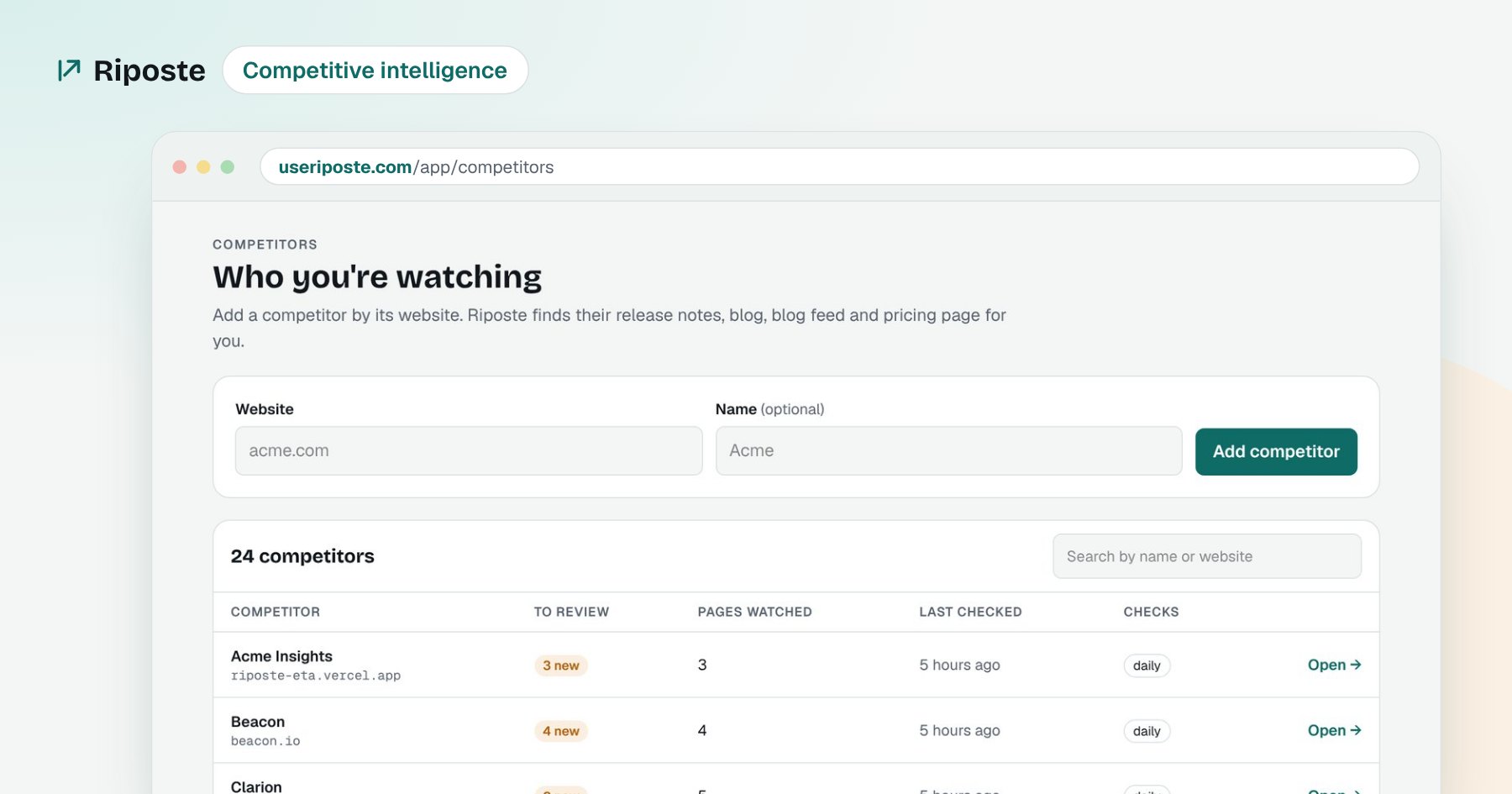
I built Riposte because I was a PMM spending hours every Monday checking competitor pages by hand. So it's built for that person.
Riposte is a good fit if you:
- Are a solo PMM or a small marketing team
- Track 3 to 10 competitors
- Want daily checks of pricing, release notes, blogs, sitemaps, news and YouTube
- Want each change explained for your product, with a ready response like a battlecard update or talk track
- Also care about who AI tools recommend for your buyers' questions
Riposte is not the right fit (yet) if you:
- Need CRM integrations that push battlecards into deals
- Run formal win/loss programs
- Need X or LinkedIn monitoring today (YouTube is live, the others are planned)
A free starter setup
Not ready to buy anything? This free setup covers the basics for two or three competitors:
- Google Alerts for each competitor's name, for news
- Their blog's RSS feed in a feed reader, for new posts
- A free page monitor on each pricing page
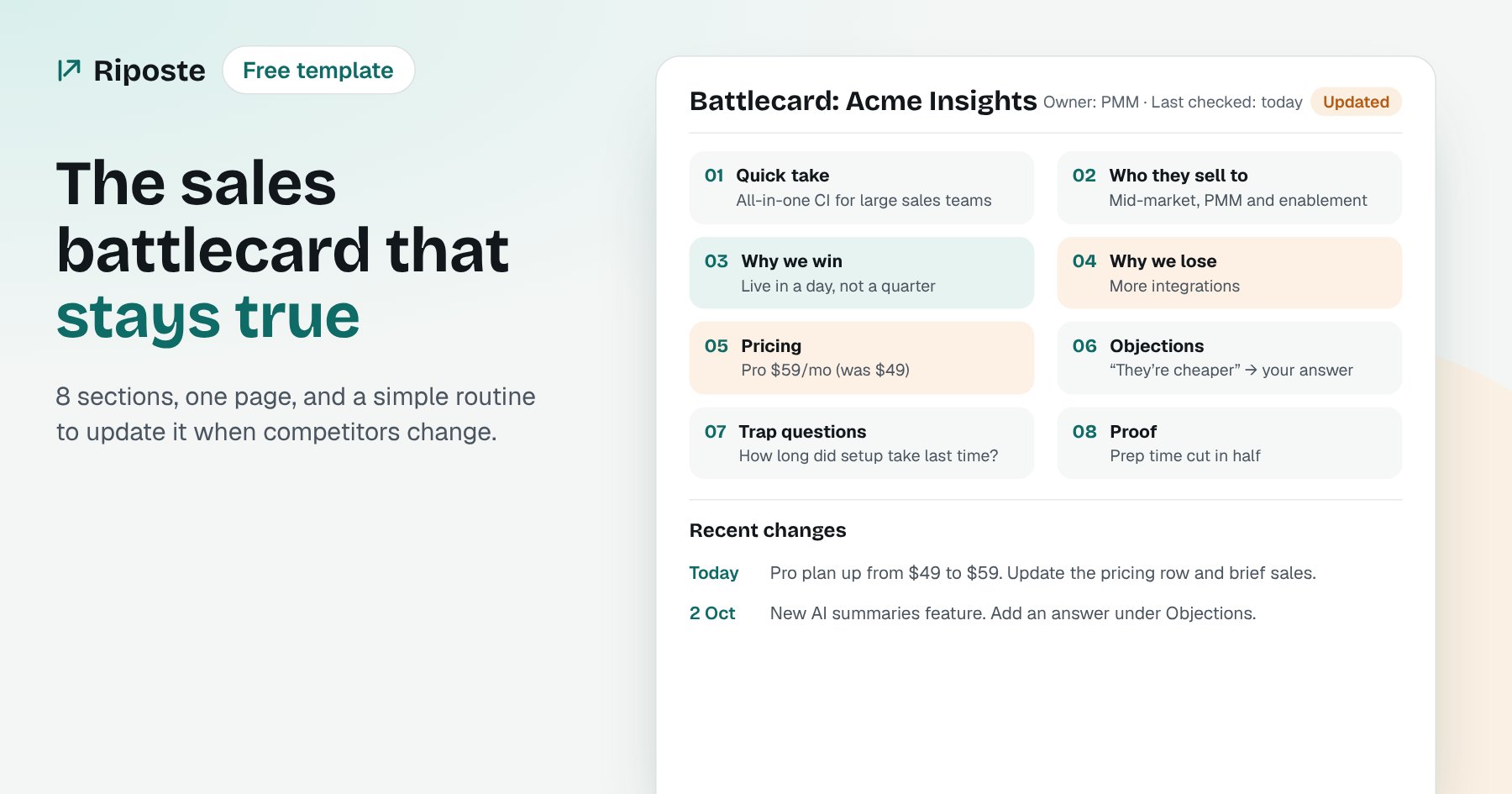
- A shared doc with one battlecard per competitor and a "Recent changes" list
It works, but it takes time every week, and you still have to work out what each change means. When that time adds up, a tool pays for itself.
Wrapping up
There's no single best competitive intelligence tool, only the right type for your team. Big sales teams get the most from an enterprise platform. SEO teams need search data. And small teams need something that does the daily checking and helps them respond, so their time goes into the response, not the research.
The bottom line
Choose by team size and job, not by feature list. Large sales teams need an enterprise platform; small teams need a light tool that checks competitors every day and helps them respond fast.
Frequently asked questions
What are competitive intelligence tools?
Competitive intelligence tools collect what your competitors change and publish, such as pricing, product launches, content and news, and help your team understand and act on it. They range from simple page monitors to full platforms with battlecards and sales integrations.
What is the best competitive intelligence tool?
There isn't one best tool for everyone. Crayon and Klue are strong choices for large sales teams, Semrush and Similarweb are best for search and traffic data, and lighter tools like Riposte suit small marketing teams that need daily alerts and ready responses.
How much do competitive intelligence tools cost?
Enterprise platforms like Crayon and Klue sell custom annual contracts, so you need a quote, and third-party estimates put them in the tens of thousands of dollars a year. SEO tools and page monitors have published monthly plans, and some tools have free plans or a free beta.
Are there free competitive intelligence tools?
Yes. Visualping has a free plan for watching a few pages, Google Alerts covers news mentions, and Riposte is free during its beta. A free setup works for two or three competitors, but takes more of your time as you grow.
What is a good alternative to Crayon or Klue for a small team?
Small teams often choose a lighter tool such as Kompyte or Riposte. These check competitors automatically without the setup, onboarding and annual contract that enterprise platforms usually need.
What features should a competitive intelligence tool have?
Look for automatic checks of pricing, product, content and news pages, noise filtering, a clear explanation of why each change matters, and a way to turn changes into actions like battlecard updates. Integrations with Slack or your CRM matter more as the team grows.
What is the difference between competitive intelligence and market intelligence?
Competitive intelligence focuses on specific competitors and what they do. Market intelligence is wider and covers the whole market, including customers, trends, regulations and market size.
Can AI do competitive intelligence?
AI can read competitor pages, spot real changes, summarise them and draft responses much faster than a person. A person still needs to judge what matters for the business and check facts before anything is shared.
How long does it take to set up a competitive intelligence tool?
Light tools can be set up in minutes by adding competitor websites. Enterprise platforms usually need onboarding over several weeks, because they connect to your CRM and sales tools.
Do I need a competitive intelligence tool if I only have a few competitors?
If you lose deals to them or they change prices often, yes, because a tool catches changes you would miss by hand. If they rarely change anything, a monthly manual check may be enough.