Saniya Gazala
In short
A competitor content gap analysis finds the topics your competitors cover and you don't, so you know what to write next. Check three places: the keywords they rank for and you don't (with a tool like Ahrefs Content Gap or Semrush Keyword Gap), what they've published in the last few weeks (from their sitemap and blog feed), and the buying questions where AI answers name them and not you. Log every gap, rank them by buyer intent and fit with your product, and turn the top few into briefs.
On this page
- 01What a competitor content gap analysis is
- 02Before you start: pick 3 to 5 competitors
- 03Step 1: Find the search gap
- 04Step 2: Find the publishing gap
- 05Step 3: Find the AI answer gap
- 06Step 4: Put every gap in one log
- 07Step 5: Pick the gaps worth filling
- 08Step 6: Turn each gap into a brief, then publish
- 09Mistakes I'd avoid
- 10Where Riposte fits, and where it doesn't
- 11Guides in this topic
- 12How I wrote this
- 13Sources
- ✓The bottom line
- ?Frequently asked questions
In my last product marketing role, every Monday started the same way. I exported each competitor's newly published pages from an SEO tool, compared them with last week's sheet, and pasted what was new. Then someone asked, "So what should we write?", and the sheet didn't really answer that.
That's the problem with most content gap analysis. It produces a long list of keywords, and very little of it turns into content anyone publishes. This guide is the process I'd use now: three places to look, one simple log, and a way to pick the few gaps worth your time.
What a competitor content gap analysis is
A content gap analysis finds the topics your competitors cover and you don't. Most guides stop at keywords, but I look in three places:
- The search gap: keywords they rank for and you don't.
- The publishing gap: what they've started writing about in the last few weeks, before it ranks.
- The AI answer gap: buying questions where AI assistants name them and not you.
Each one shows you something the others miss. The search gap shows what's already working for them. The publishing gap shows where they're heading. The AI answer gap shows where buyers are getting a shortlist without you on it.
Before you start: pick 3 to 5 competitors
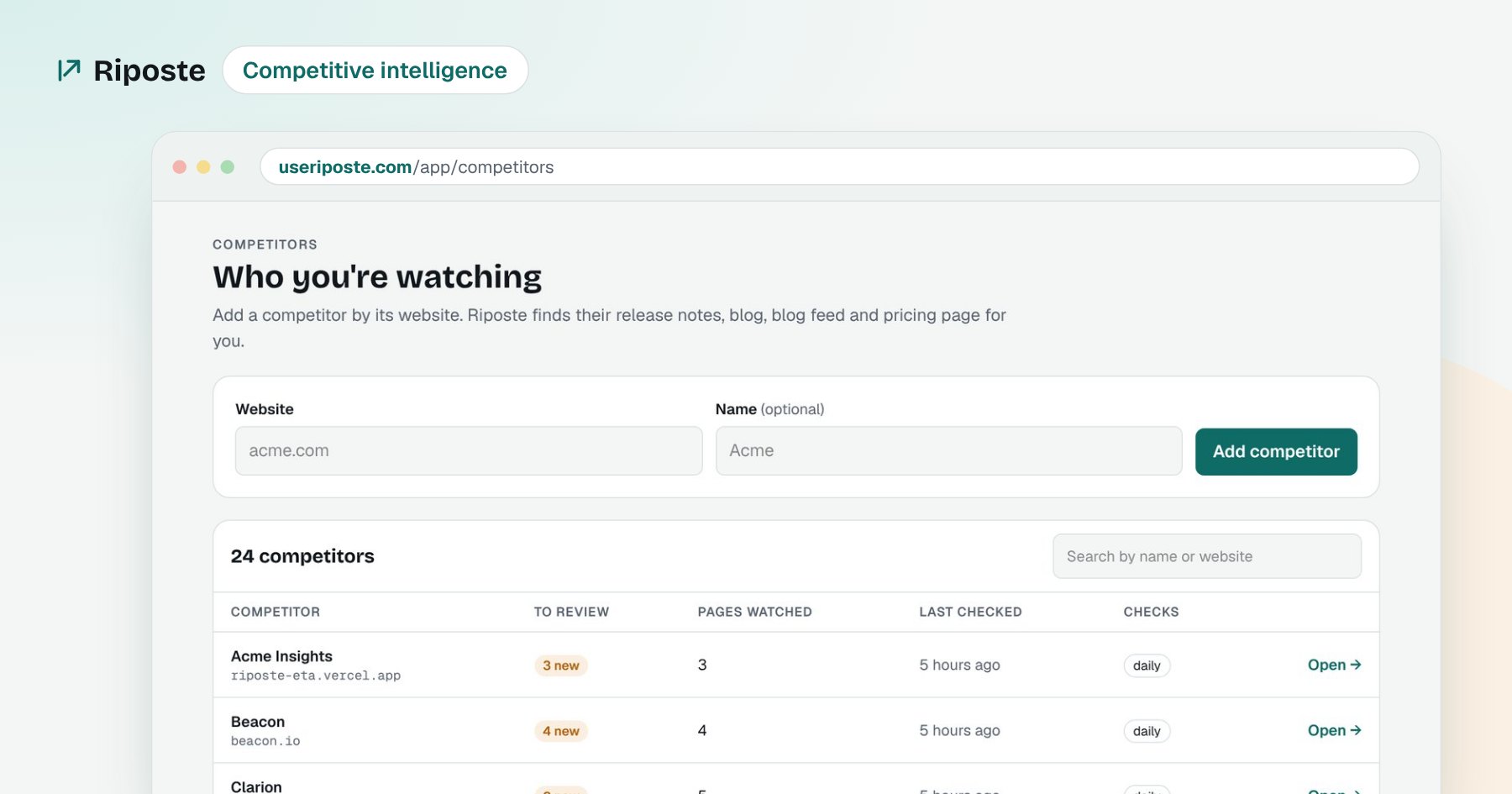
Pick the competitors you lose deals to most often. Then add any site that keeps outranking you for your main buying keywords, even if it isn't a direct competitor. A review site or a big publisher can be your biggest search competitor without selling anything like your product.
More than five gets hard to act on. You'll end up with hundreds of gaps and no time to fill them.
Step 1: Find the search gap
This is the part SEO tools do well. The two best known:
- Ahrefs Content Gap shows "what organic keywords that other websites rank for, that your target website does not rank for". You can compare up to 10 competitors and filter by position, keyword difficulty and traffic.
- Semrush Keyword Gap compares up to five domains side by side. The views I find most useful are Missing (all competitors rank, you don't), Weak (you rank lower than all of them) and Untapped (at least one competitor ranks, you don't).
How I'd use the results:
- Filter for buying intent first. Keywords with "best", "vs", "alternative", "pricing", "for [team type]" or "how to [the job your product does]" are closer to a sale than broad definitions.
- Group keywords into topics. Twenty keywords about the same thing are one gap, not twenty.
- Look at the ranking page, not just the keyword. Is it a comparison page, a guide, a template, a tool? The page type is often the real gap.
Step 2: Find the publishing gap
Keyword tools show what already ranks, and that takes time. To see what competitors are building now, look at what they've published recently:
- Their sitemap. Most sites have one at
/sitemap.xml. Many list a last-modified date for each page, so you can sort by what's new or recently changed. - Their blog feed. Often at
/feedor/rss, or linked in the page footer. - Their resources, docs and comparison pages. New "vs" or "alternatives" pages tell you who they're targeting.
When two or more competitors start writing about the same topic within a few weeks, pay attention. It can mean they're seeing demand there.
And check updated pages, not just new ones. When I was doing this by hand, a competitor page kept reappearing in my export every week, and I assumed they were "optimizing" it. That was an assumption, not a fact. When you actually compare the versions, you sometimes find they've changed what the page is for, like turning a definition page into a comparison page. I wrote about how to spot that in how to tell when a competitor changes a page's search intent.
Step 3: Find the AI answer gap
More buyers now ask an AI assistant for a shortlist before they search. So add a third check:
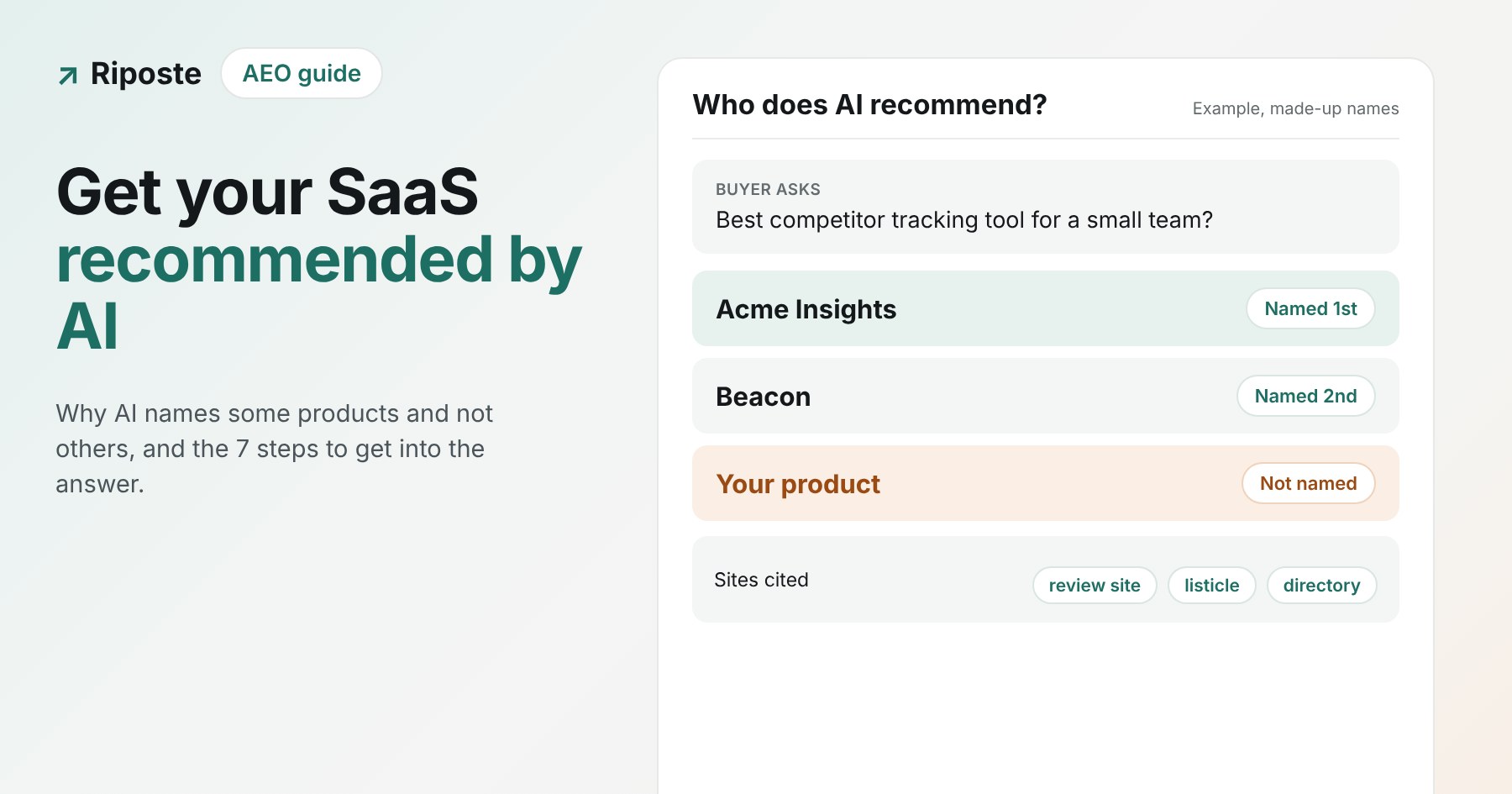
- Write down 10 to 20 questions your buyers would ask, without any brand names. For example, "best competitor tracking tool for a small marketing team".
- Ask them in the AI assistants your buyers use.
- Note which products get named, and which sites the answers cite.
Every question where a competitor is named and you aren't is a gap. The cited sites show what to improve or where to get listed. I've written the full process in how to get your B2B SaaS recommended by AI. If you want a quick first look, the free AI recommendation checker asks 3 buyer questions about your product in Gemini with Google Search.
Step 4: Put every gap in one log
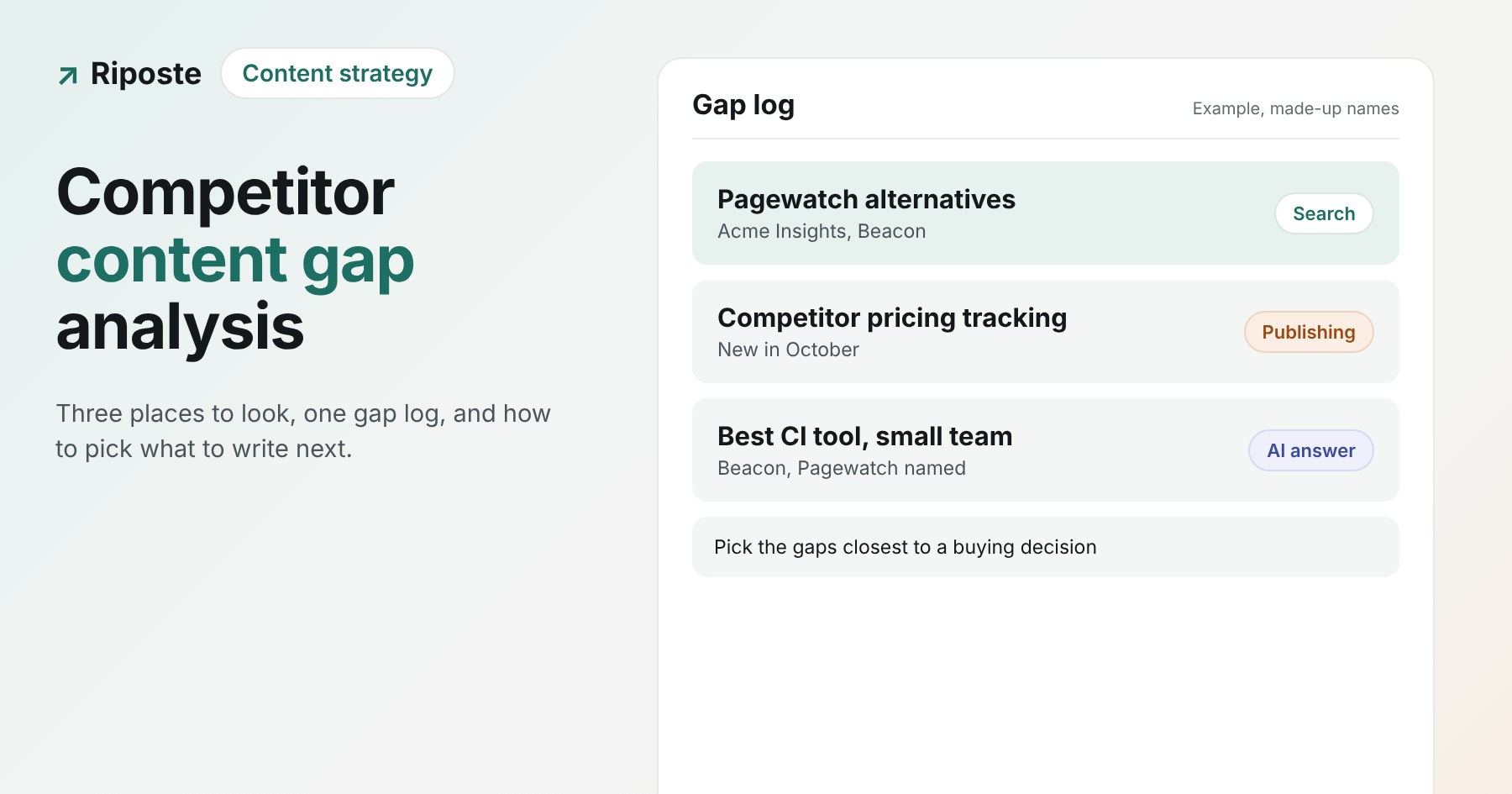
Three checks give you three messy lists. Put them in one log, one row per topic. Here's what mine looks like, with made-up competitors:
| Topic | Gap, and who covers it |
|---|---|
| Pagewatch alternatives | Search. Acme Insights, Beacon |
| Competitor pricing tracking | Publishing. Acme Insights, Beacon (both new in October) |
| Best CI tool for a small team | AI answer. Beacon, Pagewatch named |
| Battlecard template | Search. Beacon |
Add three more columns for scoring: buyer intent, product fit and your angle. A spreadsheet is fine.
Step 5: Pick the gaps worth filling
You won't fill every gap, and you shouldn't. For each topic, ask:
- Is it close to a buying decision? Comparisons, alternatives, "best tool for" and pricing topics come first. Broad definitions come last.
- Does it fit what your product really does? A gap you can only fill by stretching the truth isn't a gap for you.
- Can you add something they can't? First-hand experience, your own data, a free tool or template. Google's helpful content guidance asks whether content offers "original information, reporting, research, or analysis". A copy of the competitor's page doesn't.
- How much work is it? A comparison page you can write this week beats a research report you'll finish next quarter.
Pick three to five topics. Leave the rest in the log for next time.
Step 6: Turn each gap into a brief, then publish
For each topic you picked, write a short brief:
- The target keyword or question, and the search intent
- Your angle: what you'll say that the ranking pages don't
- A direct answer for the top of the page, so AI answers can quote it
- An outline, plus FAQs buyers ask
- Two to four internal links, to and from the new page
Then publish, and check the same gaps again in four to six weeks.
Mistakes I'd avoid
- Treating every missing keyword as a gap. Many are irrelevant to your buyers. Filter hard.
- Copying the competitor's page. Use it to understand what the searcher needs, then write something more useful.
- Only looking at search. By the time a page shows up in a keyword tool, it may have been live for weeks. Watch what they publish.
- Ignoring AI answers. If buyers get a shortlist from an AI assistant, being missing from it is a gap too.
- Running it once. A gap analysis from six months ago describes a market that has moved.
Where Riposte fits, and where it doesn't
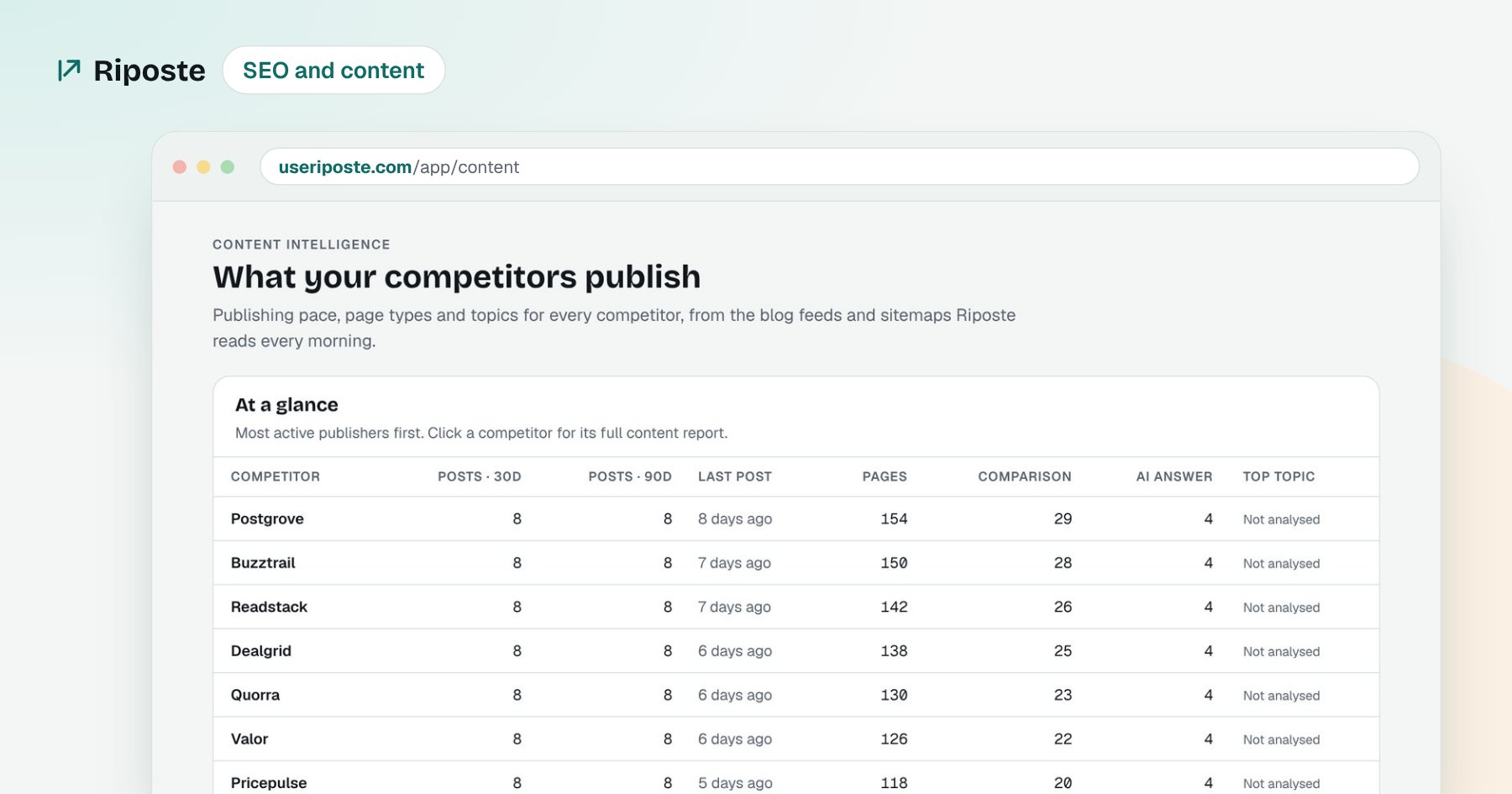
Riposte covers the publishing gap and the AI answer gap. Its Content intel reads each competitor's blog feed and sitemap every morning. It shows how often they publish, what kinds of pages they have and the topics they keep writing about. A topic counts as a trend when two or more competitors published about it in the last 45 days, and any trend can become a content brief with a keyword, angle, outline and FAQs. AI visibility asks your buyers' questions in Gemini with Google Search every week, and a gap there can become a brief too.
It doesn't show search volumes or keyword rankings. For the search gap, use Ahrefs, Semrush or a similar SEO tool.
Guides in this topic
- How to spot a competitor's search intent change: when a rewritten page is the gap.
- Living comparison pages: the page type that fills the most buying-intent gaps.
- How to get your B2B SaaS recommended by AI: closing the AI answer gap, step by step.
How I wrote this
I'm a product marketer, and I build Riposte, so I have a stake in this topic. The process comes from doing competitor content research by hand every week in my last role, and from building Riposte's Content intel. Facts about Ahrefs and Semrush come from their own help pages, and the Google quote from Google's own guidance, all opened on 17 November 2026. I use AI to help me draft, and I check every fact myself.
Sources
- Ahrefs: How to use Content Gap to find keyword ideas from competitor websites, checked 17 November 2026
- Semrush: Keyword Gap, checked 17 November 2026
- Google Search Central: Creating helpful, reliable, people-first content, checked 17 November 2026
The bottom line
Don't stop at a keyword list. Look at what competitors rank for, what they're publishing now and where AI names them, then fill the few gaps closest to a buying decision first.
Frequently asked questions
What is a competitor content gap analysis?
It's a check of which topics your competitors cover and you don't, so you can decide what to publish next. It usually looks at the keywords they rank for, the pages they publish and, more and more, the AI answers that name them.
What's the difference between a keyword gap and a content gap?
A keyword gap is the list of search terms a competitor ranks for and you don't. A content gap is wider: it also covers topics they've just started publishing about, page types you don't have, and questions where AI answers name them and not you.
What is the best tool for content gap analysis?
For search, Ahrefs Content Gap and Semrush Keyword Gap are the best known. Ahrefs compares up to 10 competitors and Semrush up to 5. For what competitors are publishing right now, you need something that reads their sitemap and blog feed, like Riposte's Content intel, or a regular manual check.
Can I do a content gap analysis for free?
Yes, by hand. Open each competitor's sitemap and blog, list their recent pages, and compare them with yours. Ask AI assistants your buyers' questions to see who gets named. It's slower, and you won't get search volumes, but it works for 3 to 5 competitors.
How many competitors should I include?
Three to five. Pick the competitors you lose deals to, plus any site that keeps outranking you for your main buying keywords, even if it isn't a direct competitor.
How often should I do a content gap analysis?
Run a full one every quarter, and check what competitors publish every week. New pages show you where a competitor is heading before those pages rank.
How do I decide which content gaps to fill first?
Start with gaps close to a buying decision, like comparisons, alternatives and 'best tool for' pages, that fit what your product really does and where you can add something they can't, like first-hand experience or your own data.
Should I copy the pages my competitors rank with?
No. Use their pages to see what the searcher needs, then write something more useful. Google's helpful content guidance asks whether a page adds original information or analysis, not whether it covers the same points as everyone else.
Does content gap analysis help with AI search?
Yes, if you include AI answers. Ask the buying questions your customers ask AI assistants, note which competitors get named and which sites get cited, and treat each miss as a gap.
What should a content brief from a gap include?
The target keyword or question, the search intent, your angle, a direct answer for the top of the page, an outline, FAQs and the internal links to add. That's enough for anyone to write it well.