Read your feed and signals
In short
Every real competitor change becomes a signal in your Feed: what changed, why it matters to you and what to do, with an impact level. Mark it reviewed, dismiss it, or build an action kit to respond.
What's in a signal
Each signal has three parts:
- What changed: the facts, from the competitor's own page
- Why it matters to you: judged against your product
- What to do: the next step
It also shows the impact (high, medium or low) and the type: pricing, product, content, positioning or news.
The feed views
- To review: new signals you haven't handled yet
- All: everything except noise
- Noise: small changes Riposte filtered out
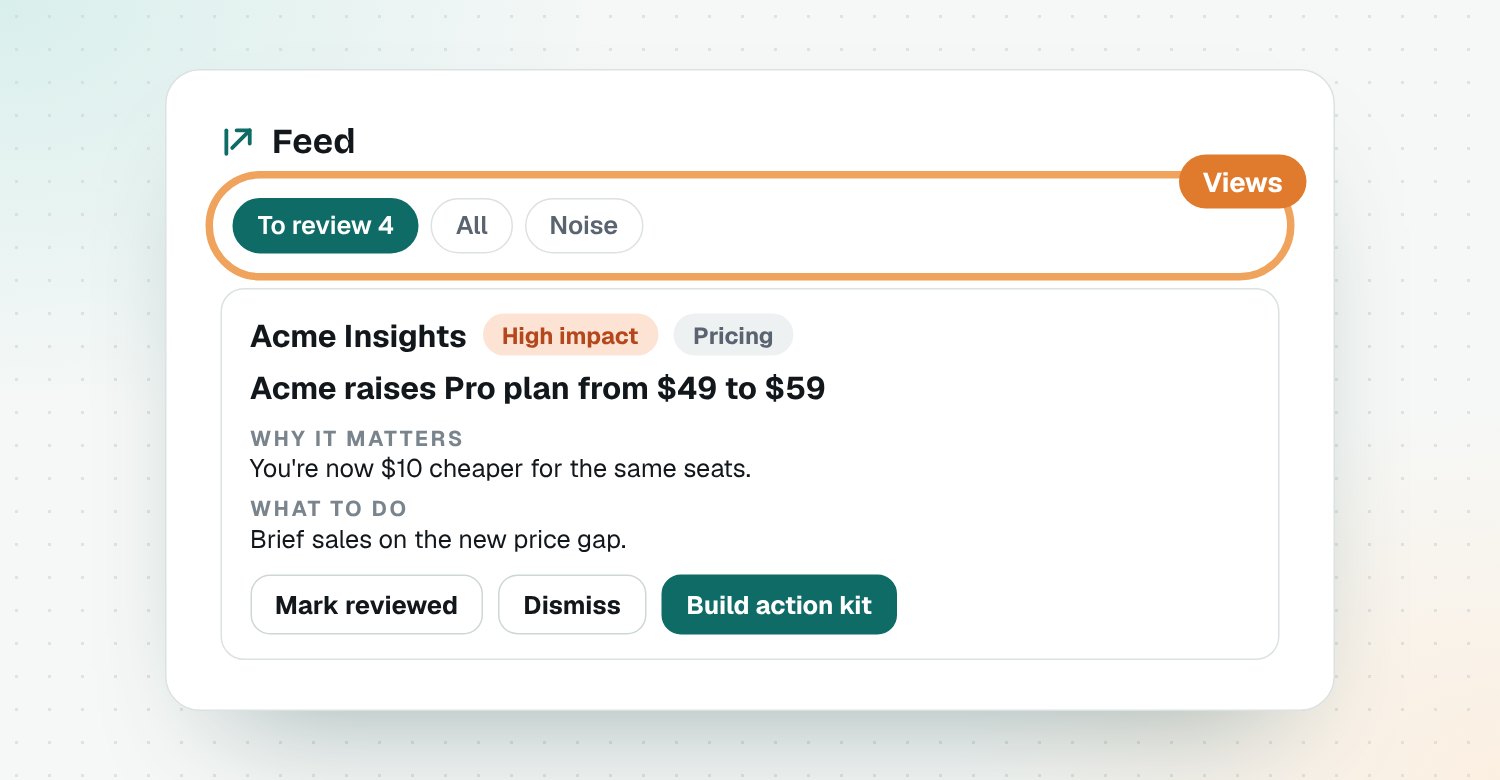
Handle a signal
- Mark reviewed when you've seen it.
- Dismiss when it doesn't matter.
- Build action kit to turn it into a response with owners and drafts.
Questions
What is a signal?
A signal is one real competitor change, explained: what changed, why it matters for your product and what to do about it.
What do high, medium and low impact mean?
How much the change matters to your product and buyers. High-impact changes are also sent as alerts by email or Slack.
What is noise?
Changes that don't matter, like a new date or a cookie banner. Riposte filters them out, and you can still see them under Noise.
What are connected moves?
Several changes from one competitor that point the same way, such as a new pricing tier plus a launch, grouped into one bigger story.